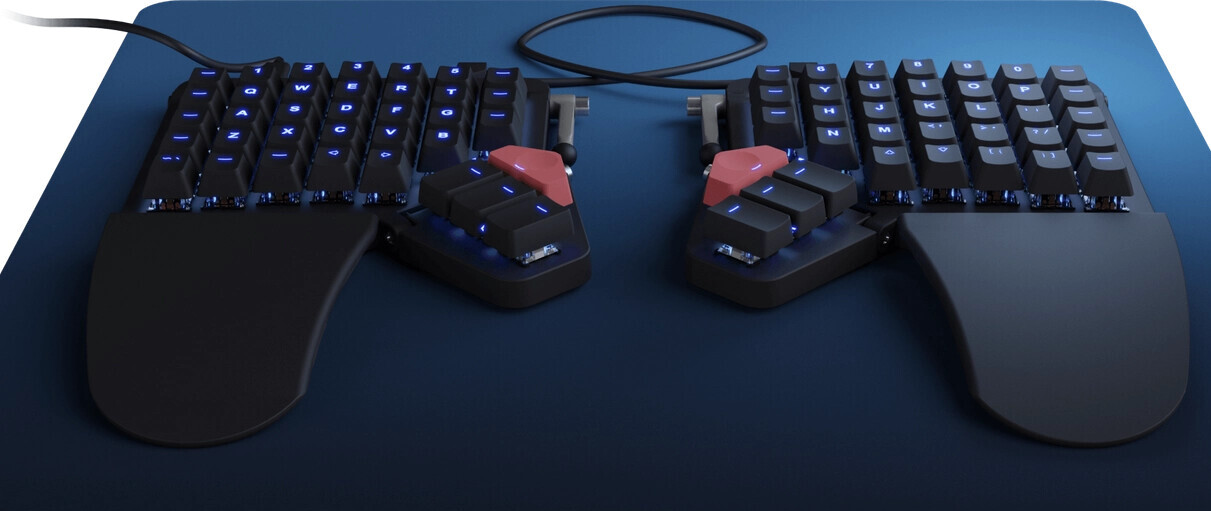
For years, I treated my workstation like an afterthought. If it worked and didn’t look terrible, that was good enough. I sat for hours every day, told myself discomfort was normal, and assumed serious pain was something that happened to other people.
I was wrong. A few very sharp moments made that clear, and permanently changed how I think about the place where I spend most of my waking hours.
Chair
I was in the floor gym, just about to lift a small weight. I bent down, and then it happened: a knife went through my back. The pain was so sharp I was instantly disoriented. I thought something had stabbed me, and I tried to turn my head to look behind me, but the pain exploded, making even that small movement impossible. I truly believed I had broken something.
For weeks, my back had felt like I was carrying bricks, a constant ache from the sustained bad posture of my old, cheap gaming chair. But this injury was the breaking point.
When the doctor finally told me it was just muscular, the relief was intense. I dodged this one. But right then, the fear turned into commitment: I knew I had to avoid having less luck next time. I spent most of my day in that seat, and I realized I had to stop prioritizing cheap convenience and start investing in prevention.
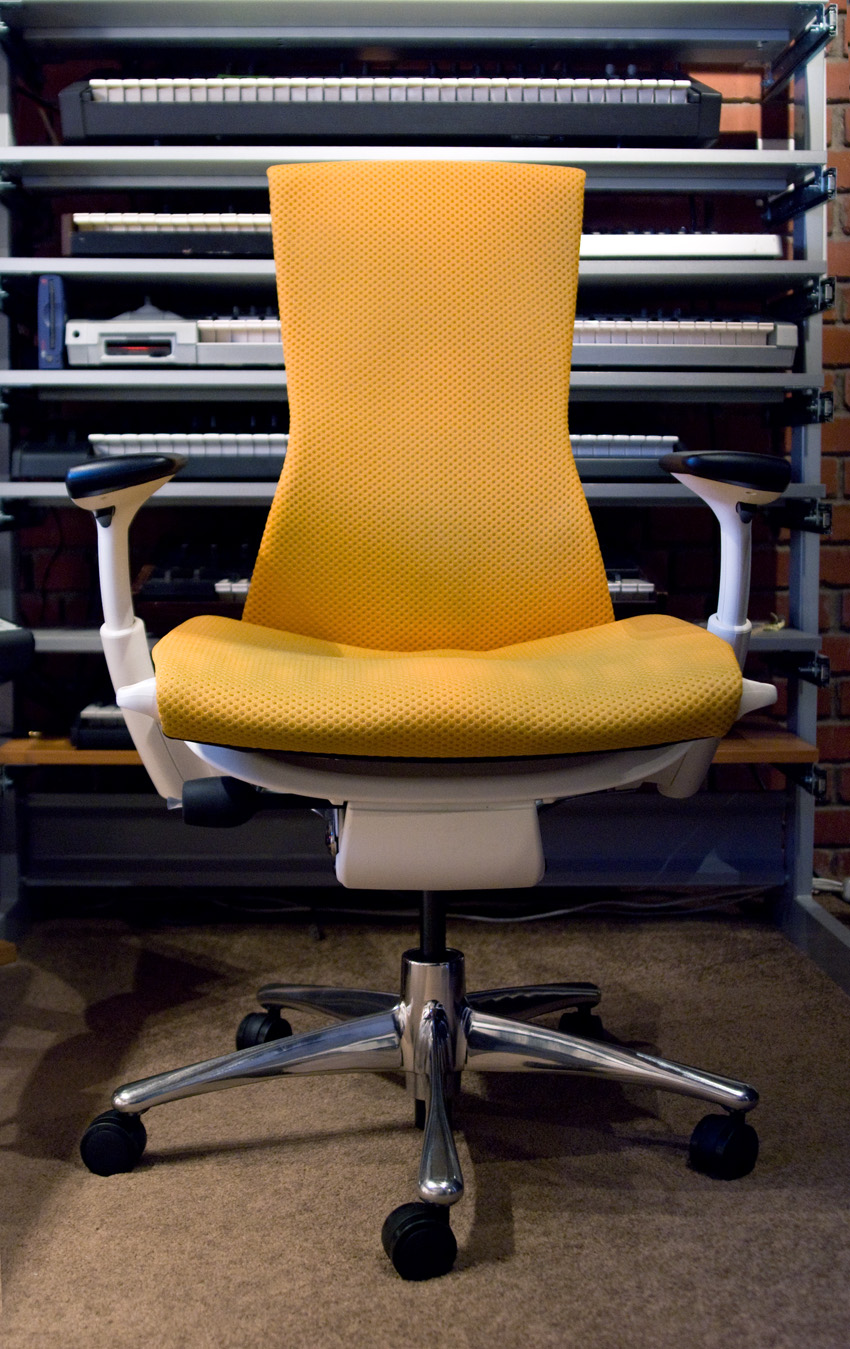
Choosing the Herman Miller Embody was a huge leap of faith. The price was high, but the bigger fear was spending that much money on the wrong chair, especially since I couldn’t test it out. I couldn’t find any store with this chair around my city to give it a try. I had to rely entirely on reviews.
When the Embody finally arrived, it felt instantly better. Yet, skepticism lingered. Was this what a premium chair should feel like, or was I just trying to justify the cost to myself? But after my first full day of work, the difference was undeniable. That evening, I didn’t feel tense; I wasn’t carrying bricks. That doubt vanished completely. I saw that the chair, unlike my old one, was engineered to make bad posture uncomfortable, gently guiding me toward a position that protected me. I felt the profound relief and conviction that the investment had paid off in a way no cheap chair ever could. Four years later, it’s still like new, a daily reminder that avoiding pain is worth the cost.
Keyboard
I was deep in the flow state, hands twisted over a standard, rigid keyboard, the kind everyone uses. But when the focus broke, and I finally stood up from a long coding session, the sound always came. Not a loud pop, but a series of tiny clicks running up my spine, like an old house settling after a storm. My shoulders, which I’d been clenching up around my wide back just to keep my hands positioned on the letters, dropped with a sigh. It was a sweet release of tension, but also a daily reminder that the tools I used were actively working against me.
I just accepted it as inertia, until I saw my coworker’s setup; a split keyboard, perfectly angled. In that moment the solution clicked. I had hope; logically, a split design had to fix my forced, terrible posture, but I wasn’t sure. I was taking a risk on an expensive piece of gear.
I bought the split orthogonal keyboard, but it was not an immediate fix. For a solid week, I felt like a terrible developer. My efficiency cratered. I made dumb mistakes, hitting the Enter key when I meant to delete, sending mid-sentence messages to coworkers. I had a blueprint of the key layout permanently stuck on my second monitor. But I committed fully: I used that split keyboard all day for work and dedicated 20 minutes every evening to a training web app. Full immersion.
And then one day, about two weeks in, it happened. I finished a complex function and glanced up, not to check where the curly bracket was, but just to breathe. I realized I didn’t need the blueprint anymore. It was still there, but my eyes had skipped right over it. Muscle memory had finally overwritten the clench and the click.
I felt an immense sense of pride for sticking with the training. The fear of having purchased an expensive, slow paperweight was gone, replaced by the profound realization that my comfort and productivity boost was absolutely worth the struggle. I had solved a physical problem with a technical tool, and the release of tension was no longer a tiny click in my back, but a massive one in my brain. I immediately thought: I have to share this new knowledge. I know I’m not the only developer dealing with this discomfort in silence, and if I hadn’t seen that ZSA Moonlander on my coworker’s desk, I would still be cracking my back every time I stood up.
I combine this split keyboard with a magic trackpad in the middle that, at least for me, it’s the perfect combination for comfort and productivity.